Advancing EDS Analysis with Next-Generation Detector Technology
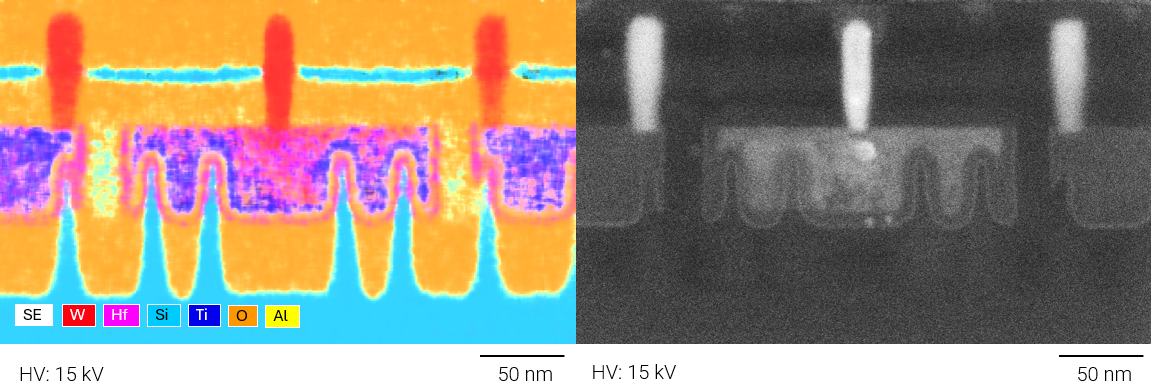
The story in brief
Recent reports highlight advancements in Energy Dispersive X-ray Spectroscopy (EDS) analysis through next-generation detector technology. These innovations significantly enhance detection limits and spatial resolution, enabling more precise material characterisation. For professionals in materials science and engineering, this represents a shift towards higher-fidelity data acquisition. The development supports more accurate elemental mapping and quantification, crucial for quality control and research applications. This technological leap improves the reliability of analytical results across various industries, from manufacturing to pharmaceuticals, by reducing analysis time and increasing sensitivity to trace elements within complex samples.
What this means for your career
This technological leap means your ability to interpret high-resolution spectral data will become increasingly valuable. Professionals in quality assurance, materials engineering, and forensic science should pay close attention. You must upgrade your analytical skills to handle complex datasets generated by these advanced detectors. A smart professional would seek training in advanced spectroscopy techniques and data analysis software. Consider upskilling in laboratory management or technical sales roles, where understanding these capabilities drives decision-making. By mastering the interpretation of next-generation EDS outputs, you position yourself as a critical asset in industries demanding precise material verification and rigorous quality standards.
Original reporting: AZoM ↗
Build the skills this story demands
Accredited UK qualifications from LSBR, studied 100% online.
Want to go deeper? Browse all Information Technology courses at LSBR — accredited UK qualifications studied 100% online.