Language-guided inverse design of multiclass metamaterials using generative artificial intelligence
The story in brief
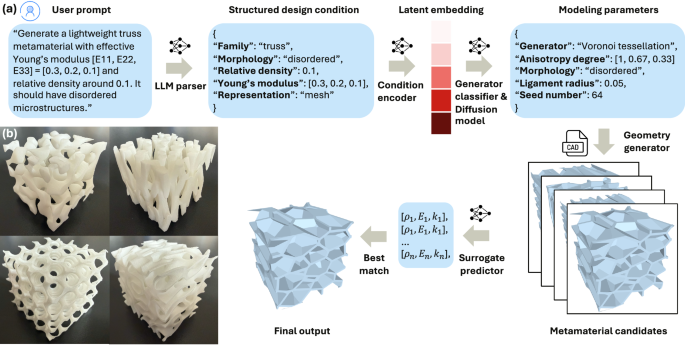
Researchers have developed a novel method using generative artificial intelligence to design multiclass metamaterials. Published in Nature, this approach employs language-guided inverse design, allowing engineers to specify desired material properties through natural language prompts. The AI then generates complex structural designs that achieve these physical characteristics. This breakthrough significantly accelerates the development cycle for advanced materials used in telecommunications, optics, and sensing technologies. It represents a shift from traditional trial-and-error experimentation to precise, AI-driven computational design, offering a more efficient pathway for creating next-generation functional materials.
What this means for your career
This development signals a critical shift towards AI-augmented engineering. Professionals in materials science and product development must now integrate generative AI tools into their workflows to remain competitive. Your value lies in bridging domain expertise with computational literacy. Focus on understanding how to translate technical requirements into effective AI prompts. Engineers, R&D managers, and data scientists should collaborate closely to interpret AI-generated designs. Upskill in machine learning fundamentals and prompt engineering immediately. Companies will prioritise candidates who can leverage AI for rapid prototyping. Do not view this as replacement, but as a powerful amplifier of your technical capabilities. Stay agile and embrace interdisciplinary learning to lead in this evolving landscape.
Original reporting: Nature ↗
Build the skills this story demands
Accredited UK qualifications from LSBR, studied 100% online.