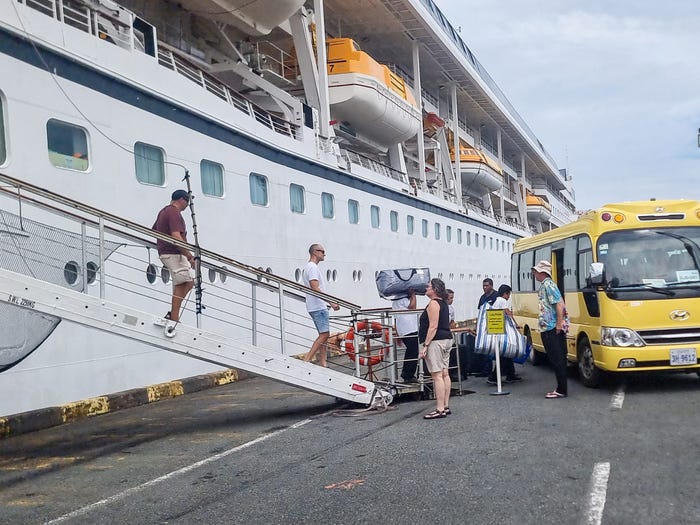
Passengers living on a round-the-world cruise were given 8 hours to pack up their lives and leave the ship in Cambodia
The story in brief
A recent incident involving a round-the-world cruise ship in Cambodia has highlighted the potential for sudden travel disruptions. Passengers were reportedly given just eight hours to vacate the vessel and settle their affairs. This abrupt departure underscores the vulnerabilities inherent in long-haul maritime tourism and complex international logistics. For professionals, this event serves as a stark reminder of operational fragility in the global travel sector. It illustrates how quickly established itineraries can collapse, necessitating immediate evacuation and repatriation procedures. The situation reflects broader challenges in managing large-scale passenger movements and emergency response coordination in an increasingly interconnected world.
What this means for your career
This incident highlights the critical value of crisis management and operational resilience skills. You must recognise that logistical disruptions are inevitable in global industries. Professionals in hospitality, tourism, and supply chain management should prioritise contingency planning and risk assessment capabilities. Develop expertise in emergency response protocols and stakeholder communication to navigate such volatility. If you work in corporate travel or event management, review your vendor contracts for force majeure clauses and evacuation support. Smart professionals will upskill in business continuity planning, ensuring they can maintain service delivery during unexpected crises. By mastering these competencies, you position yourself as a stabilising force within your organisation, capable of turning chaotic situations into managed outcomes rather than reputational disasters.
Original reporting: Business Insider ↗
Build the skills this story demands
Accredited UK qualifications from LSBR, studied 100% online.